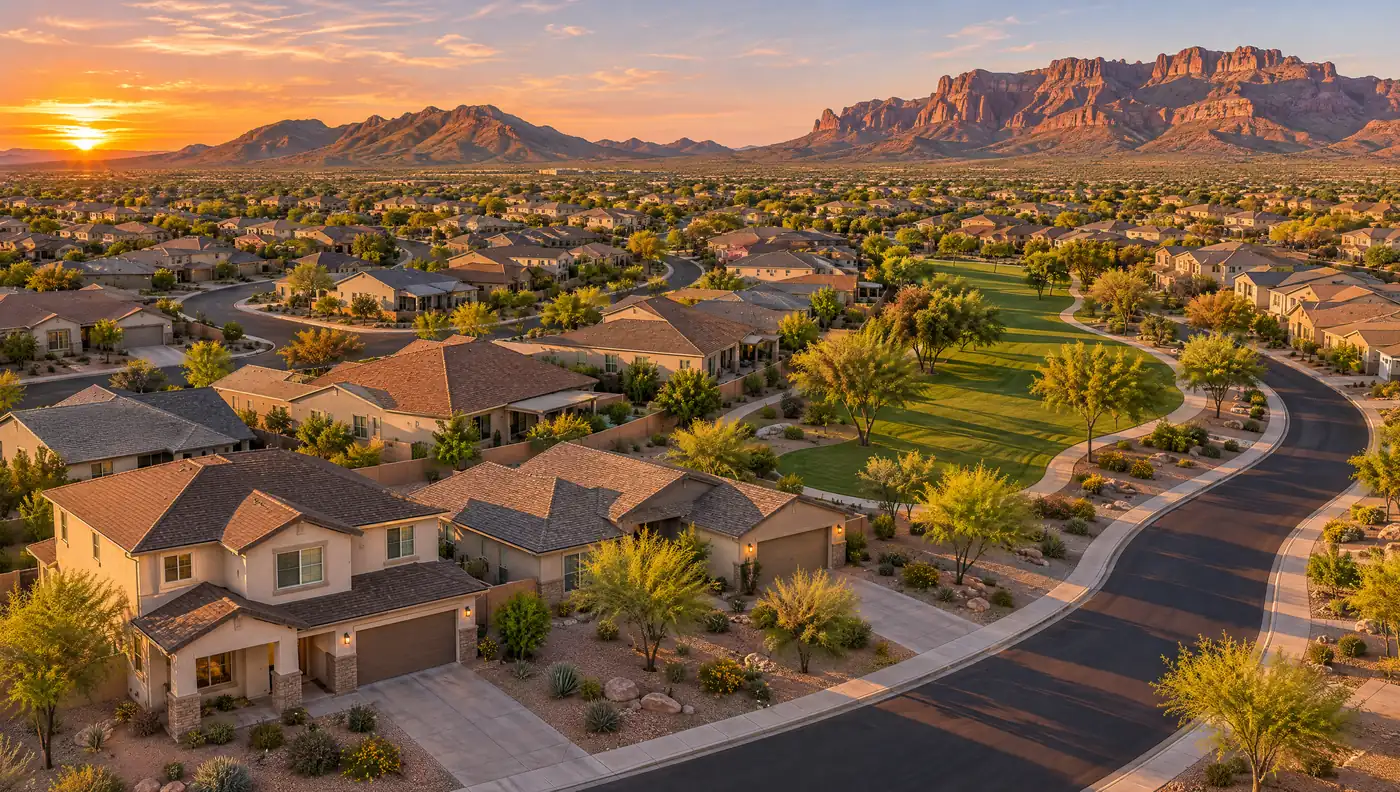
Community associations are part of life in Arizona. The Community Associations Institute counts approximately 2,264,000 Arizonans living in more than 9,900 community associations statewide. Closer to home, Axios Phoenix reported that “nearly three-quarters of Valley home listings included HOA fees” in 2024.
Homes built in the same few years tend to have roofs that age together. When the asphalt shingle roofs in a community start to fade, the questions land on the board: replace, repair or wait? We help with one piece of that. We evaluate shingle roofs across a community, give you photos and a written summary, and treat the roofs that are good candidates. We don’t do repairs or replacement, so there’s no bigger job hiding behind our summary.
Communities this is built for
- HOA boards weighing what to do about aging shingle roofs.
- Community managers who need facts in writing to take to the board.
- 55+ communities and their architectural committees.
- Condo and townhome associations where the association maintains the roofs.
- Owners of rental portfolios with several shingle-roofed homes.
Only the shingle roofs, though. Valley homes have a mix of tile, shingle and foam roofs. If your community has more than one type, we look at the shingle roofs and leave the rest to a roofer who works on those.
How a community roof walk works
Choose the sample
We sit down with the board or the manager and pick a sample of roofs. We aim for a spread: different streets, different phases, different build years, and slopes facing every direction. A roof walk is only as useful as the sample behind it.
On the roof
Someone gets on each roof in the sample and runs the same checks every time: how the shingles bend, granule loss, cracking and curling, lifted or missing tabs, valleys, vents and flashing. Every roof gets photographed. We ask the manager to let owners know before we’re on their roof.
The written summary
You get a condition summary organized by street or by phase. For each roof in the sample, it says whether the roof looks like a treatment candidate, should wait, or needs a roofer, with photos to back it up. The board can use it to see where the community stands and plan from there.
It’s a sample, so it shows patterns. Each home still gets its own look before it’s treated. Our page on whether a roof is a candidate explains what we’re weighing.
Architectural review: what we give the committee
If your architectural committee needs to approve roof work, we give it what it asks for. That usually includes:
- What the treatment is. APEX-1132, a soy-based rejuvenation treatment made by SoyLei Innovations of Ames, Iowa. SoyLei calls it “a spray-applied rejuvenation treatment, not a replacement for repairs or a film-forming roof coating.” Our soy-based roof treatment page has more.
- The maker’s own documents. SoyLei’s product page and its safety data sheet, so the committee reads the source, not our summary of it.
- Whether it changes the look. SoyLei says treated shingles “may appear darker or refreshed after application, especially when the existing roof is sun-bleached.” A committee will want to know that, so we say it up front.
- The shingle makers’ position. Some shingle makers, Owens Corning among them, have published bulletins advising against field-applied rejuvenators. Owens Corning’s August 2026 bulletin is public. A treatment can also affect a homeowner’s shingle warranty, so owners should check their warranty terms.
Homeowners asking the same question can read does my HOA need to approve roof treatment.
Homeowner nights and door hangers, explained plainly
Homeowner nights
If the board wants residents to hear it firsthand, we’ll come to a community meeting. We explain what the treatment is, which roofs it isn’t for, what SoyLei says and doesn’t say, and what the shingle makers’ bulletins say. Then we take questions. Nobody gets signed up on the spot. It’s an information night, not a sales night.
Door hangers
Before we work on a street, residents get a door hanger. It gives the planned date, what to expect, and who to contact at the management company. It also asks for a few simple things on spray day: close windows, move cars off the driveway, and keep kids and pets inside. Nothing on it asks anyone to buy anything.
Phasing by budget and by season
You don’t have to do every roof at once. We help you phase the work so it fits the budget and the calendar:
- By street or phase, so each part of the community is done together and looks consistent.
- By condition, starting with roofs that are good candidates now and leaving the ones that can wait.
- Around the community’s calendar, so spray days don’t land on events, move-ins or other work already booked.
- Around the weather. SoyLei says to “confirm there is no rain, strong wind, or severe weather expected during or after application,” which matters during monsoon season, June 15 to September 30.
SoyLei lists drying times only for mild conditions, 70 to 80°F, and publishes no maximum roof temperature for application. We’ll work through timing with the board rather than guess.
Spray day in a community
The product’s safety data sheet carries the signal word “Danger” for serious eye damage and skin sensitization, so spray day around residents gets real care. Our crew wears eye and skin protection, covers plants, cars and windows against overspray, and keeps residents and pets back from the work. SoyLei also warns that “freshly treated shingles can be slippery,” so nobody walks a treated roof until it has dried.
The crews, trucks and spray equipment come from Mark Voorhies’s court resurfacing business, which works on pickleball, tennis and basketball courts around the Phoenix area. Roofs are the newer part of the work, which is one more reason we keep the scope narrow.
What we don’t do
- Repairs or replacement. If a roof needs either, the summary says so and the board can bring in a roofer.
- Tile, foam or metal roofs.
- Storm repairs or insurance claims.
- Promises about how many more years a roof will last after treatment.
- Treating any roof without its own look first, even if the house next door was a fit.
For communities that want ongoing checks after treatment, the roof care plan covers return visits with photos.
Start with one conversation
Tell us about the community through the contact page: roughly how many shingle roofs there are, about how old they are, and whether there’s an architectural committee. We’ll suggest a sample for a roof walk. Individual owners can book a free roof evaluation any time, and the roof rejuvenation page explains the treatment itself.
Common questions
Does every home in the community have to be treated?
No. Only roofs that pass their own evaluation get treated. Whether an owner can opt in or out depends on who is responsible for roofs under your governing documents. In any community, some roofs will be good candidates, some should wait, and some need a roofer. The summary shows which is which, roof by roof.
Who pays, the association or each owner?
That depends on your governing documents and who maintains the roofs. In some associations the association looks after roofs. In others each owner does. We work with whichever setup you have and quote the party that’s responsible. Your manager or the association’s attorney can confirm who that is before anything is scheduled.
Will treated roofs look different from the untreated ones next door?
They may. According to SoyLei, treated shingles can look darker or refreshed, especially on a roof the sun has bleached. That’s one reason we suggest phasing by street or phase, and one reason the architectural committee should see the product information before any work starts.
What do shingle makers say about rejuvenators?
Some shingle makers, Owens Corning among them, have published bulletins advising against field-applied rejuvenators. We don’t hide that. A treatment can also affect a homeowner’s shingle warranty. Owners should check the paperwork for their own roof, and the board may want the maker’s answer in writing before approving a program.
Can you work with our management company?
Yes. We can send the roof walk summary and photos to the manager, the board or both, and coordinate door hangers and spray dates through the manager. Tell us at the start who should get what, and we’ll stick to it so residents hear one consistent message.
Do you treat tile or foam roofs in the community?
No. We treat asphalt shingle roofs only. If your community has tile or foam roofs as well, we leave them out of the roof walk and the summary says so. Those roofs need someone who works on that roof type, and we’d rather tell you that than pretend otherwise.