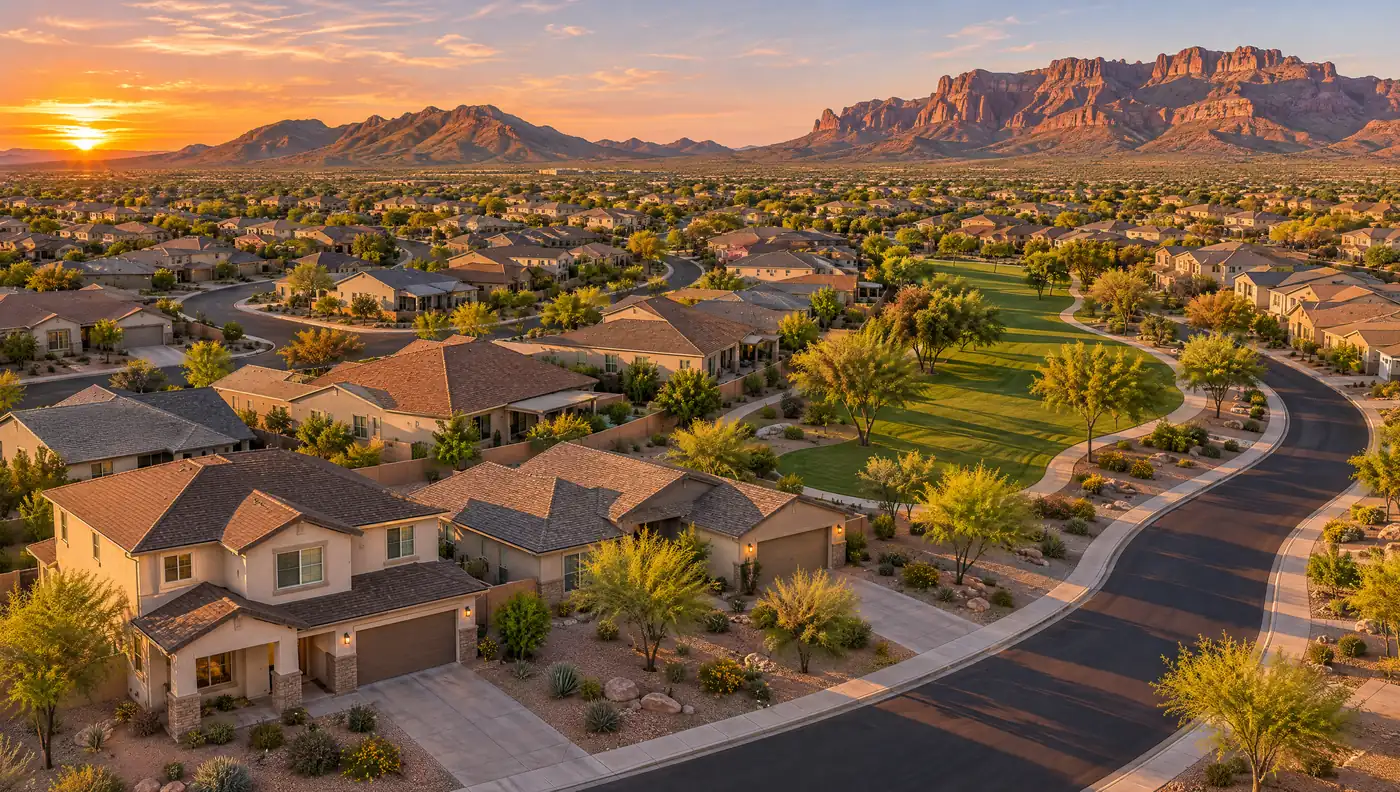
Out on the far west side of the Valley, Buckeye keeps adding neighbors. Census Bureau estimates put it at 91,498 people in its 2020 base and 125,445 by July 2025, about 37% growth (Vintage 2025). Among the places we serve, only Queen Creek grew faster.
Buckeye next to the county
Census survey figures for 2020 to 2024 show how different Buckeye’s housing is from Maricopa County as a whole.
| Census figure | Buckeye | Maricopa County |
|---|---|---|
| Median year a home was built | 2011 | 1993 |
| Housing built before 2000 | 10% | 63% |
| Detached single-family share | 93% | 64% |
| Owner-occupied homes | 86% | 65% |
| Median resident age | 35.7 | 37.6 |
Source: ACS 2020 to 2024 via Census Reporter. In plain terms, most Buckeye homes are newer detached houses owned by the people inside them.
A new house still needs a roof check
The median Buckeye house dates to 2011, but that’s the house. Your roof may be the one the builder put on, or a newer one after storm damage. The build year alone can’t tell you. A newer roof is also more likely to still be under its shingle maker’s coverage, which is why the brand matters so much here.
Paper is the quickest way to find out. Closing documents, the builder’s spec sheet or a roofer’s invoice may list the roof material and the shingle brand. Pull those out before we visit.
- Your closing packet or the builder’s home documents.
- Any roofer’s invoice, if the roof has been worked on.
- Your HOA’s architectural rules, if you have an HOA.
- Photos you took after a big storm, if you have them.
Why the brand on your roof matters
First, it confirms the roof is asphalt shingle. A lot of Valley houses have concrete tile instead, and we don’t treat tile, foam or metal. Our tile and foam page explains why.
Second, it tells you whose rules apply. A few shingle makers have put out bulletins against field-applied rejuvenators, and Owens Corning’s bulletin from August 2026 is one. On a newer roof, a treatment can affect what the maker will cover. Ask your shingle maker before anything else. Our FAQ on this helps.
HOA rules on the west side
Community associations are common in Arizona. The Community Associations Institute counts more than 9,900 of them statewide, home to roughly 2.26 million people. If your Buckeye street has one, read its rules on roof work and get an answer before you schedule. Ask whether it wants to approve roof work ahead of time, and whether a change in how the shingles look matters to it. There’s more on our HOA page.
After a monsoon storm
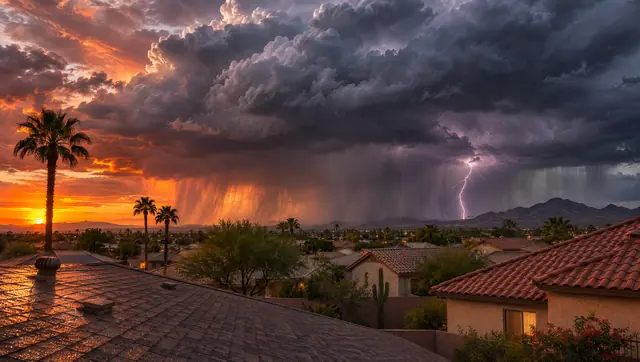
Monsoon season officially runs June 15 to September 30. The National Weather Service warns that storm outflows can bring “winds 50 mph or greater, and very dense blowing dust generated over open fields and desert.” After a big blow, have the roof checked for lifted or missing shingles before any treatment.
SoyLei Innovations, the Ames, Iowa maker of the treatment we use, says on its product page that damaged shingles need repair first. Our monsoon roof check covers what to look for.
Long summers, and what isn’t known
Newer roofs still take the full Valley summer. The official Phoenix station at Sky Harbor logged a record 70 days at 110°F or hotter in 2024 (NWS Phoenix). SoyLei’s published lab work simulated a summer roof at about 140°F, and it has no desert field data out yet. We tell every owner that before they decide.
Booking in Buckeye
We come out to Buckeye the same as anywhere else in the Valley. Have your paperwork handy. We’ll confirm the roof type, look at the shingles, and tell you whether roof rejuvenation makes sense yet or whether your roof is better left alone for now. Start by booking a free roof evaluation.