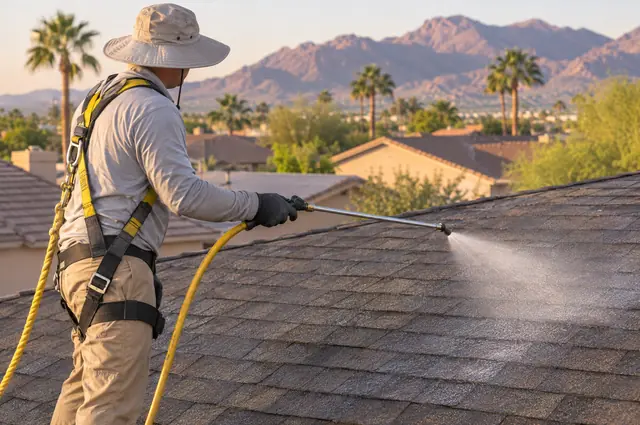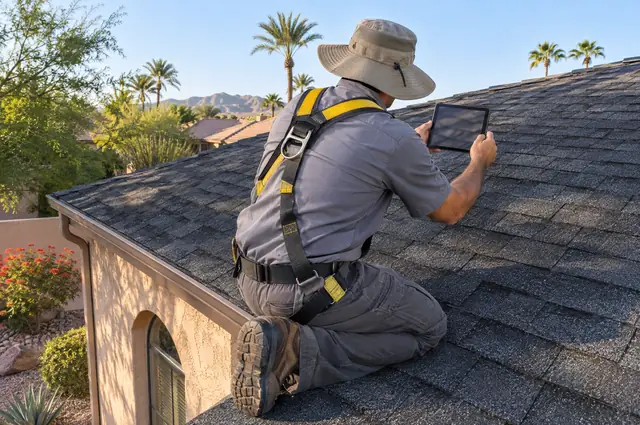
Please leave the ladder in the garage. A dark shingle roof in a Valley summer is no place to be poking around. The EPA says standard black asphalt roofs can reach 165 to 185°F at midday in summer. That’s a national figure, but Phoenix Sky Harbor averages 21 days a year at 110°F or hotter, so it isn’t hard to picture. Getting up close to the roof is our job. If you’ve been meaning to climb up and check it yourself, read this first.
A settled town
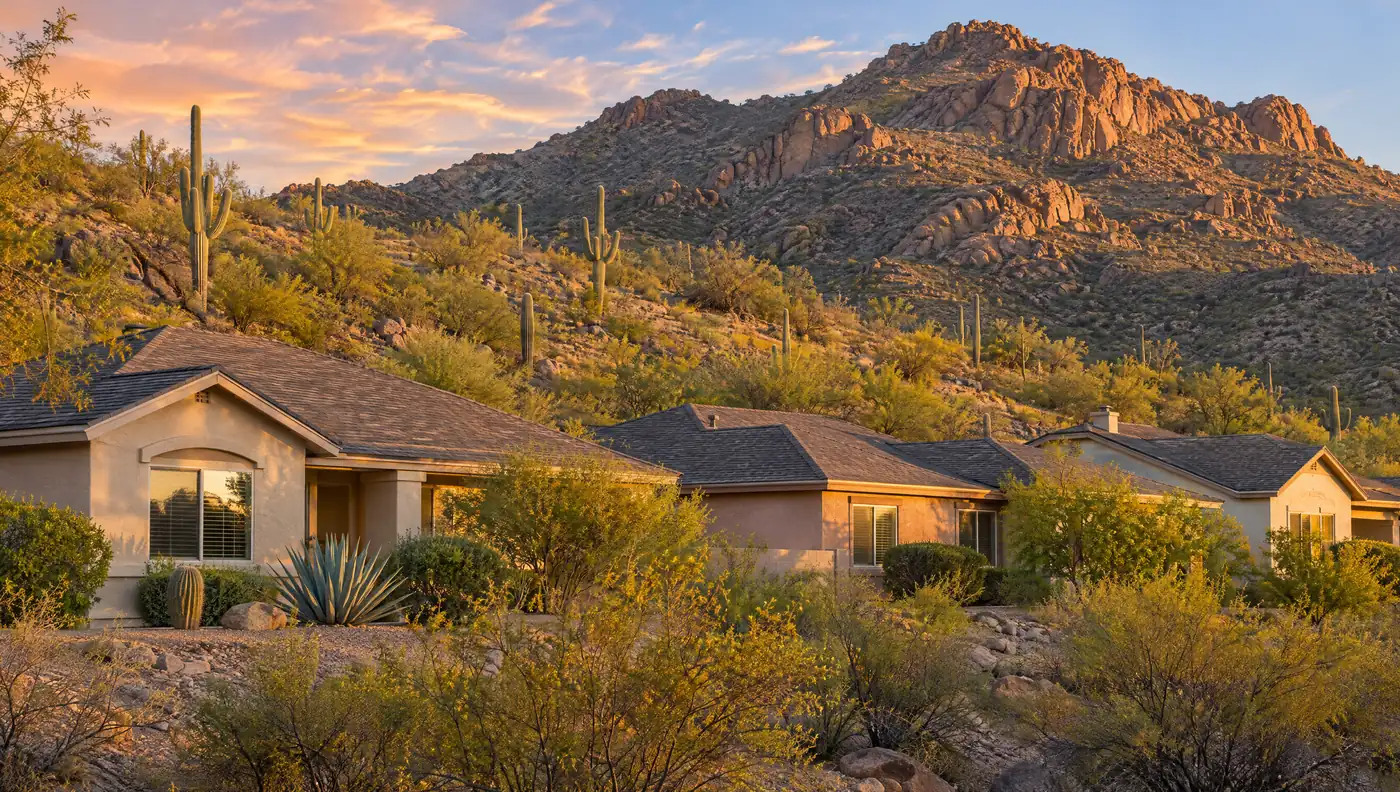
Fountain Hills isn’t changing fast. Census Bureau estimates show 23,822 residents in the 2020 base and 23,625 in July 2025, a small dip. The American Community Survey (2020 to 2024) puts the median resident age at 61.5, far above Maricopa County’s 37.6. About 84% of homes are owner-occupied.
The houses come largely from one stretch of time. The median home was built in 1994, and about 58% went up between 1980 and 1999. Those figures are on Census Reporter.
A house from the 1990s doesn’t mean a roof from the 1990s, though. Some homes that age have had a new roof since, and some haven’t. Many Valley homes also have tile, which we don’t treat. We work on asphalt shingle roofs only, so the first thing we confirm is whether yours is shingle at all. If it’s tile, see tile and foam roofs.
What you can check from the ground
- Gutters and downspout splash areas. Granules that look like coarse dark sand can mean the shingle surface is wearing. Here’s why granules end up in the yard.
- Color. Shingles that look bleached, gray or chalky.
- Edges. From across the street, curled or lifted edges.
- Gaps. Bare spots or missing pieces point to a repair, not a treatment.
- Ceiling stains. Water marks inside the house mean a leak, and a leak means a roofer comes first.
If one side of the roof looks worse than the other, there may be a reason. InterNACHI, an inspectors’ trade group, notes that “South-facing roof slopes have shorter lifespans due to increased thermal cycling and UV exposure.”
The roof is our side of the job
Treatment day adds its own hazard. SoyLei Innovations of Ames, Iowa, maker of the soy-based product we apply, warns in its application brochure that “Freshly treated shingles can be slippery”. One more reason the roof is our side of the job and the driveway is yours. The crew follows the product’s data sheet, wears the protective gear it calls for, and covers plants, cars and windows against overspray.
We’ll also be straight about the heat question. SoyLei’s lab testing simulated summer roofs at about 140°F, and the company has published no field data from desert climates. You’ll hear that at the evaluation, not after. The FAQ on rejuvenation in Arizona heat covers it in more depth.
The gentler half of the year
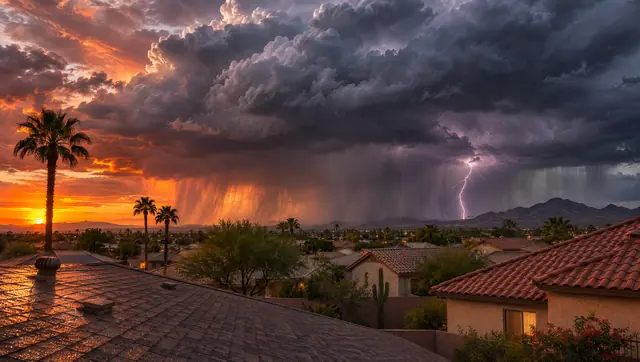
Sun on a Valley roof changes a lot with the seasons. The EPA’s UV index guide lists Phoenix’s typical midday reading at 3 (Moderate) in winter and 10 (Very High) in summer. The cooler months are a sensible time to have the roof looked at and to plan any work. SoyLei gives drying times for 70 to 80°F and names no top roof temperature for application, so timing is something we settle with you at the evaluation rather than guess at.
Booking for Fountain Hills
Fountain Hills is one of our service areas. Book a free roof evaluation and we’ll confirm the roof type, look over the shingles, and tell you plainly whether roof rejuvenation fits. If someone helps you with house matters, they’re welcome at the visit too.