Mesa is the second-largest city in the Valley, with an estimated 513,656 people in July 2025. It’s also a settled city. It grew only about 1.8% between 2020 and 2025, and most of its homes have stood for decades.
That makes Mesa a place where many shingle roofs may be past new but not yet done. That middle stretch is where roof rejuvenation belongs.
What the Census says about Mesa homes
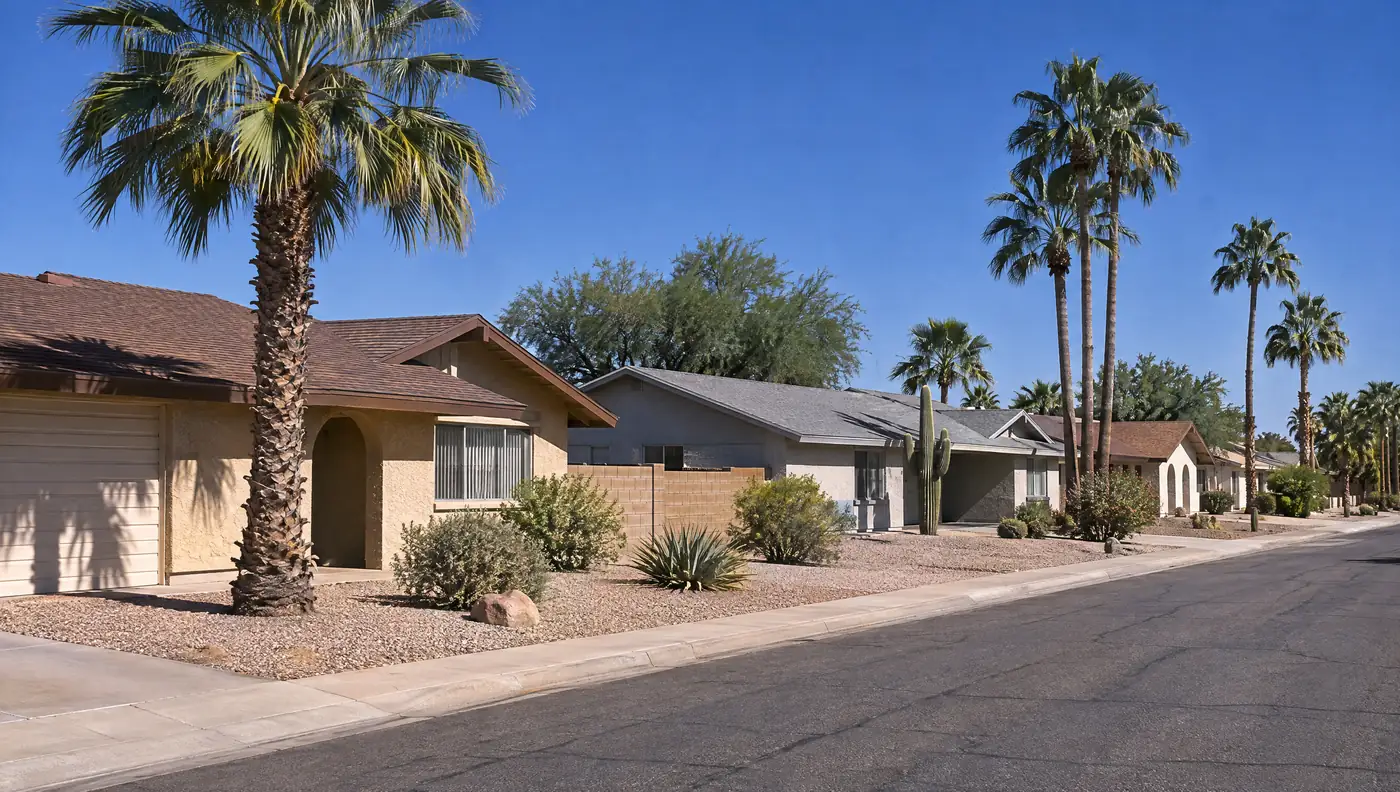
The Census Bureau’s American Community Survey for 2020 to 2024 puts the median Mesa home’s build year at 1989. About 70% of the city’s housing predates 2000, and 41% was built in the 1980s and 1990s (ACS via Census Reporter).
Two other figures shape who calls us. 64% of occupied homes are owner-occupied. And only 55% of housing units are detached single-family houses. If you’re in a townhome, condo or other attached building, the roof may be shared, so find out who is responsible for it before booking.
Build year and roof age are two different things
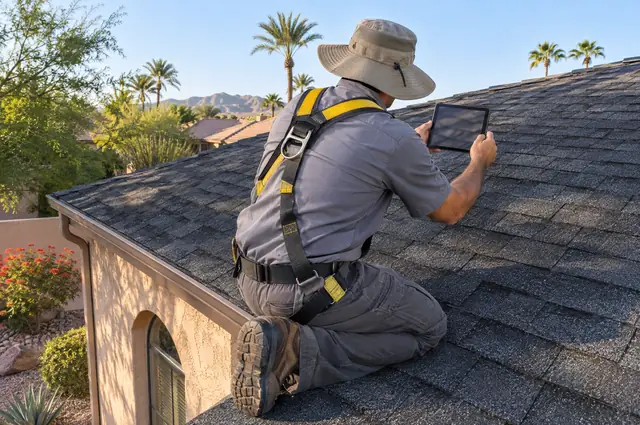
A Mesa house from 1989 might still wear its original shingles, or it might have had a new roof last year. Owners reroof after storms, before selling, or when the old one gives out. So we never guess roof age from the house. We go up and check the shingles by hand.
You may know more than you think. Did the sellers mention a new roof when you bought? Is there a roofer’s invoice or permit in your house files? Has anyone patched the roof since you moved in? Any of that helps us read what we find.
What a mid-life shingle roof looks like
Asphalt dries out with age. InterNACHI, a trade group for inspectors, says “Shingles become more brittle as volatiles, which keep them flexible, dissipate.” It adds that losing those volatiles can weaken the bond between the asphalt and its granules. Mesa gets plenty of the heat that drives this. Phoenix’s official station averages 111 days a year at 100°F or more (NWS Phoenix).
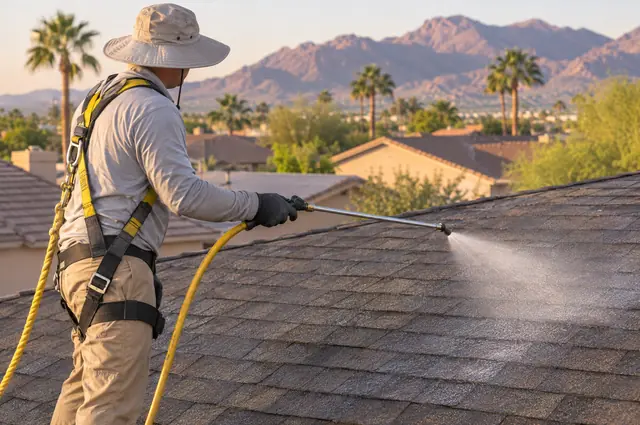
A mid-life roof has started down that road but still keeps water out, with shingles that are whole and lying flat. SoyLei Innovations, the Ames, Iowa company that makes the treatment we use, says its product is for preservation rather than emergency repair. One more honest note. SoyLei’s lab tests ran at about 140°F, and it hasn’t published any desert field data.
Three things we check on a Mesa roof
- That it’s shingle. Valley houses come with tile, flat and shingle roofs. We only treat asphalt shingles, and our tile and foam page explains why.
- That the shingles are whole. Lifted tabs, cracks, tears and missing pieces come first. SoyLei’s own guide says the treatment is “Not suitable for torn, missing, lifted, or cracked shingles”.
- That there’s granule left. The same guide says it “Will not fix severe aggregate loss or exposed fiberglass mat”. Bare patches mean the roof is past this stage.
When a roofer is the better call
If we find an active leak, soft decking or storm damage, we’ll tell you it’s a job for a roofer. Rejuvenation doesn’t fix any of those, and spraying over them would only waste your money.
If the roof passes all three checks, we’ll walk you through how treatment day works, from prep on the ground to the crew leaving, so you know what to expect before you agree to anything.
Your next step in Mesa
Not sure where your roof sits? Our candidate checklist walks through it, and the instant estimate gives you a starting figure. Mesa is one of the cities we cover across the Valley. The simplest move is to book a free roof evaluation and let us take a look.