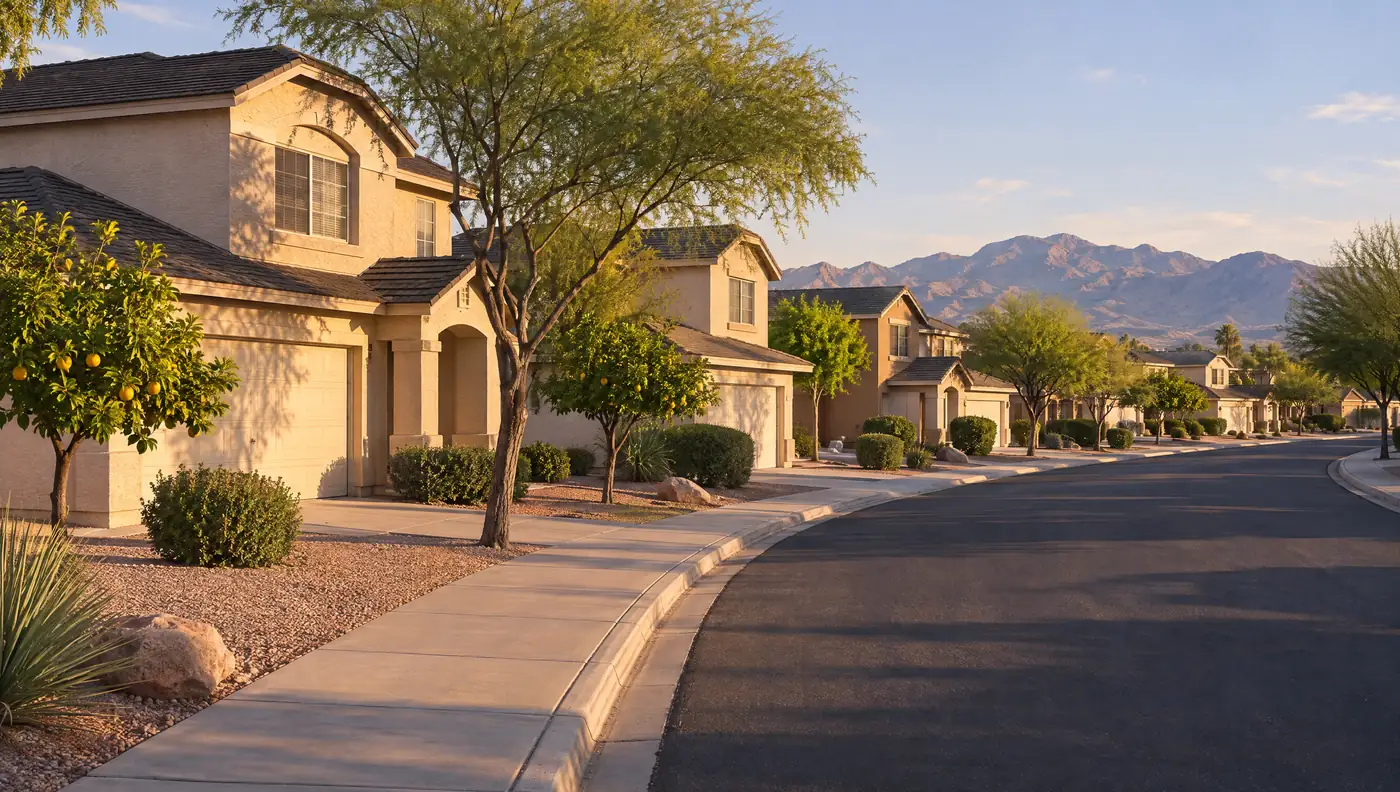
Chandler has a housing story of its own. In Census survey figures for 2020 to 2024, 47% of its homes were built between 1980 and 1999. That’s the biggest 1980s and 1990s share of any large city in the Valley. The median Chandler home dates to 1997 (ACS via Census Reporter).
Growth has leveled off. The Census Bureau estimates Chandler had 276,091 people in its 2020 base and 278,748 in July 2025 (Vintage 2025 estimates). With growth that slow, most Chandler roofs sit on houses that have been around a while.
It’s a city of owners, too. About 68% of Chandler’s housing units are detached houses, and 65% of occupied homes are owner-occupied. If that’s you, the roof call is yours to make.
Your house is from the '90s. Is your roof?
Maybe. Maybe not. A house can go through more than one roof, and nothing in the Census data tells you which one you have now. The year on the listing is a clue about the street. It isn’t a reading on your shingles.
So we don’t start from the calendar. We start from what’s on the roof, and most of the answer comes down to which of three roofs you have.
Three Chandler roofs, three answers
A tile roof
Plenty of Valley homes have concrete or clay tile. Rejuvenation is for asphalt shingles only, and we don’t treat tile, foam or metal. If that’s you, our tile and foam roofs page covers what to look into instead. No visit needed.
Shingles that are faded and stiff but whole
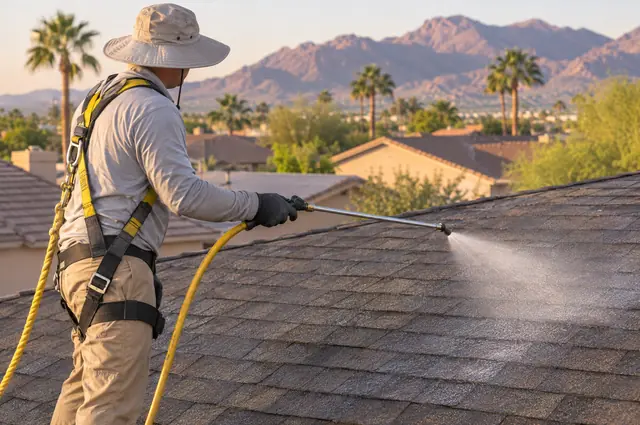
This is the roof roof rejuvenation is for. The shingles have dried out and lost some give, but they’re flat, intact and keeping water out. Heat does this to asphalt over time. Lawrence Berkeley National Laboratory researchers describe how oxidation leaves asphalt “harder and embrittled”. That’s the stage a rejuvenator is meant for.
Shingles that are cracked, lifted or bare
Now it’s a repair or a replacement, not a treatment. SoyLei’s application guide says its product is not for torn, missing, lifted or cracked shingles, and won’t fix exposed fiberglass mat. We’ll tell you that on the roof, not after a sales pitch.
What we’d put on a Chandler roof
The treatment is APEX-1132 from SoyLei Innovations, an Ames, Iowa company founded by the Iowa State University researchers who created it. SoyLei says it runs on SESO, short for semi-epoxidized soybean oil, and says that sets it apart from products built on simple oil softening. That’s the maker’s reasoning, not a field result.
On heat, here’s what’s published. SoyLei’s lab work simulated a summer roof at about 140°F. Phoenix’s official station at Sky Harbor averages 21 days a year at 110°F or above (NWS Phoenix), and SoyLei has put out no desert field data yet. Weigh that before you decide.
Before you call
A few things make the first conversation quicker. None of them are required.
- Roughly when the roof went on, if you know. A roofer’s invoice or the sale paperwork may say.
- The shingle brand, if it’s written down anywhere. Some makers have their own position on treatments.
- Any leak, stain on a ceiling, or patch job you remember.
- Your HOA’s rules on roof work, if you have an HOA.
- A photo or two of the roof from the yard.
Booking in Chandler
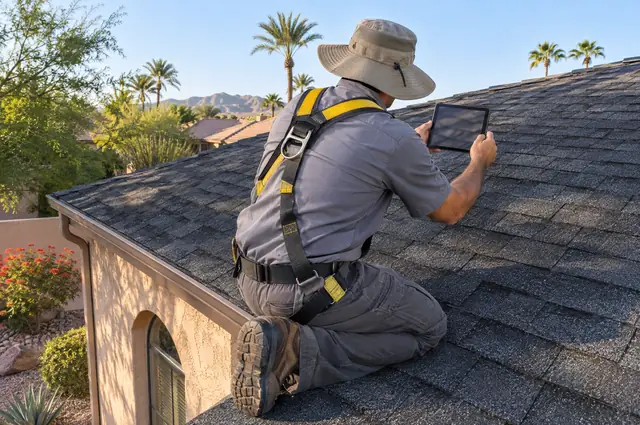
Chandler is one of the Valley cities we serve. If you have an HOA, check its roof rules first. Our HOA page has the questions to ask. Then book a free roof evaluation, and we’ll tell you which of the three roofs you’ve got. If it’s not a fit for rejuvenation, you’ll hear why and what your next move should be.