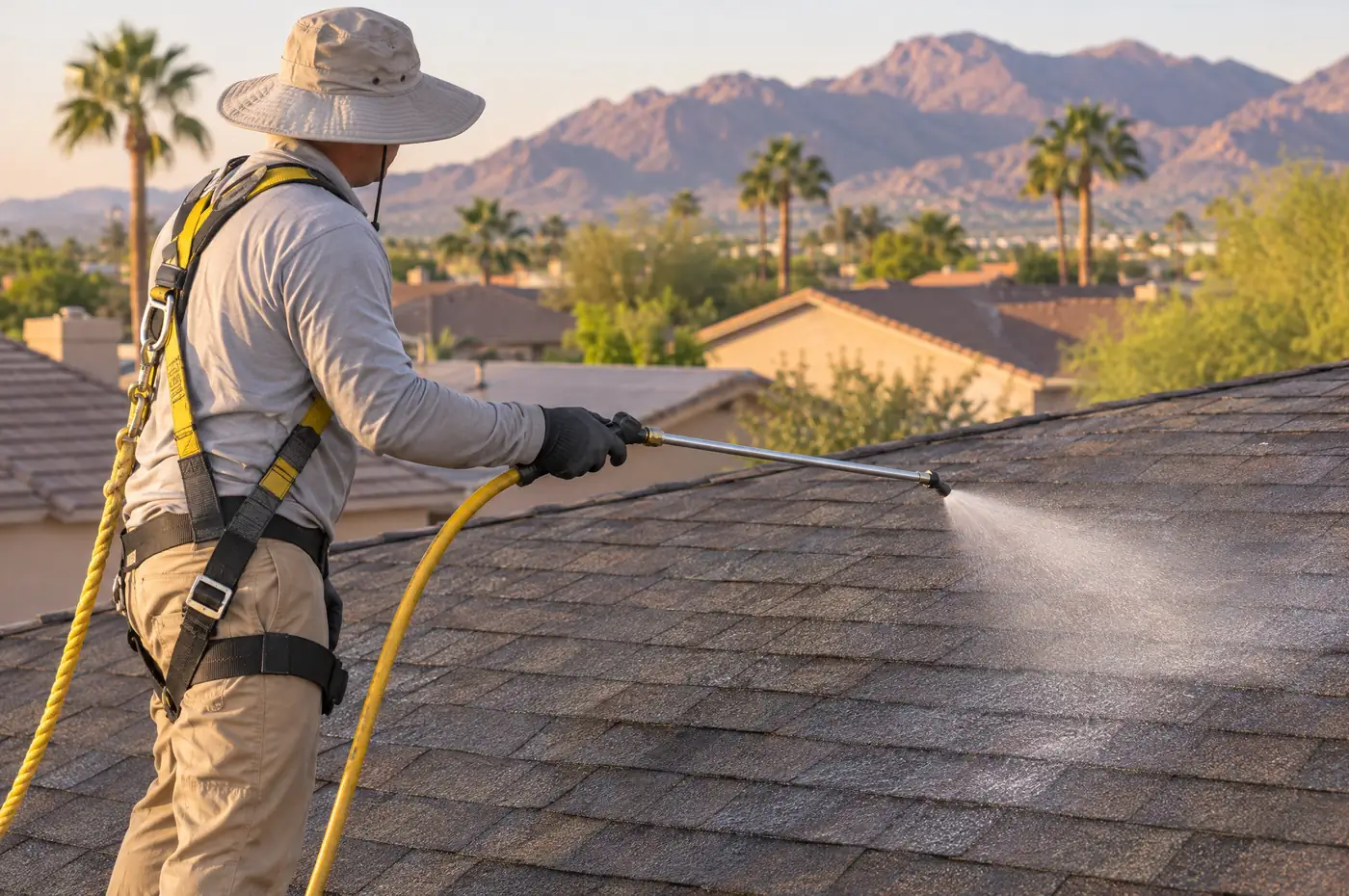
The shingles used to be dark. Now they’re a dusty, chalky gray. There’s grit at the bottom of the downspouts, and somebody has already put a replacement quote in front of you.
Before you sign it, find out what shape the roof is really in. Some tired-looking shingle roofs are still sound. The shingles are drying out, but the roof keeps water out and the decking underneath is solid. That’s the roof rejuvenation is for. Other roofs are past it, and no treatment changes that.
We’re Shingle Restore Pro, and we treat asphalt shingle roofs across the Phoenix metro. On roofs, that’s the only work we do. We don’t sell repairs and we don’t sell new roofs, so we have no reason to steer you toward either. It starts with a free roof evaluation: a person on your roof, photos of what we find, and a straight answer.
What roof rejuvenation is
Rejuvenation is a liquid treatment sprayed onto an aging asphalt shingle roof. It soaks into the shingles and is meant to help bring back some of the flexibility that heat and sun bake out of them. It goes on the roof you already have. It isn’t paint, it isn’t a repair, and it won’t put back a shingle the wind already took.
The product we use is APEX-1132, a soy-based treatment made by SoyLei Innovations of Ames, Iowa. SoyLei says it was “created by researchers from Iowa State University” and describes it as “a 5:1 soybean-oil concentrate engineered to penetrate asphalt shingles” and “restore shingle flexibility.” SoyLei also says it is “not paint, not a roof coating, and not a film-forming sealcoat.” Those are the maker’s words, not results from your roof. Our soy-based roof treatment page covers what it’s made of and what SoyLei has and hasn’t published.
Why the Phoenix sun is hard on shingles
The heat
These numbers come from the National Weather Service, not from us. At Phoenix Sky Harbor, the 1991 to 2020 normals show a July average high of 106.5°F, 111 days a year at 100°F or hotter, and 21 days at 110°F or hotter. In 2024 the city set a record with 70 days at 110°F or above.
The roof runs hotter than the air. The EPA says “standard black asphalt roofs can reach 165 to 185°F” at midday in summer. That’s a national figure. Nobody has published a measured shingle temperature for Phoenix, so we won’t quote one. The sun is strong here too. The EPA’s UV guide lists Phoenix’s typical summer midday UV index as 10, “Very High.”
What that does to a shingle
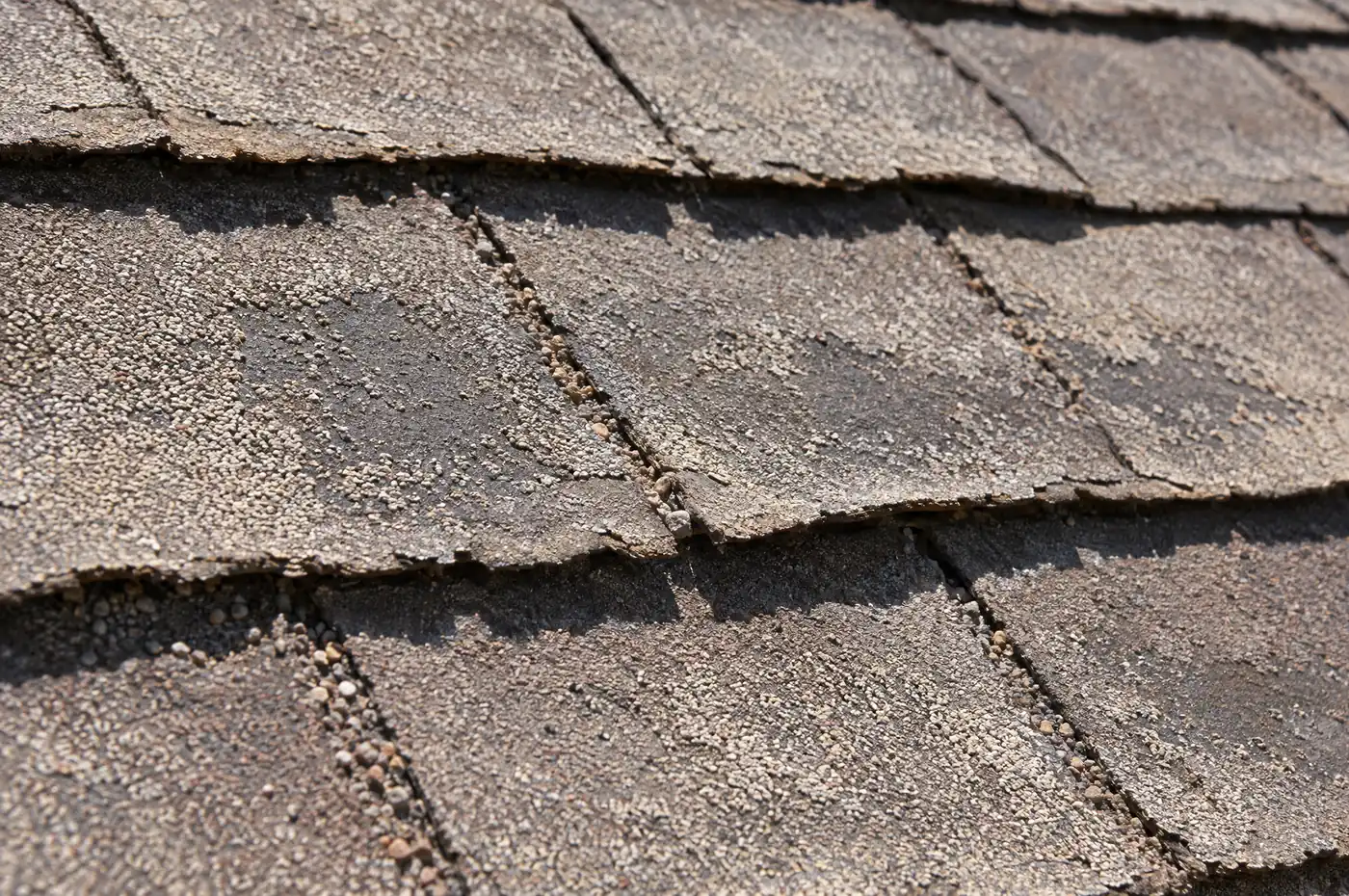
Asphalt shingles hold oils and other light compounds that keep them bendable. Heat and sunlight drive those out. Researchers at Lawrence Berkeley National Laboratory put it plainly: “As a result of oxidation, asphalt becomes harder and embrittled.” InterNACHI, an inspectors’ trade group, says the same loss of flexibility can also weaken the bond that holds the granules on.
That’s how a Valley shingle roof can look worn out while it still keeps the water out. Faded color, grit in the gutters and stiff shingles are all signs of the same process. There’s more on our Arizona heat and asphalt shingles page.
One honest note about heat
SoyLei’s published lab work heated treated shingles to 140°F to stand in for summer roof temperatures. A paper by researchers tied to SoyLei calls for field testing under natural weathering. SoyLei hasn’t published field data from Arizona or any desert climate, and it lists no maximum roof temperature for applying the product. We’d rather you hear that from us now than find it later.
Who rejuvenation is for
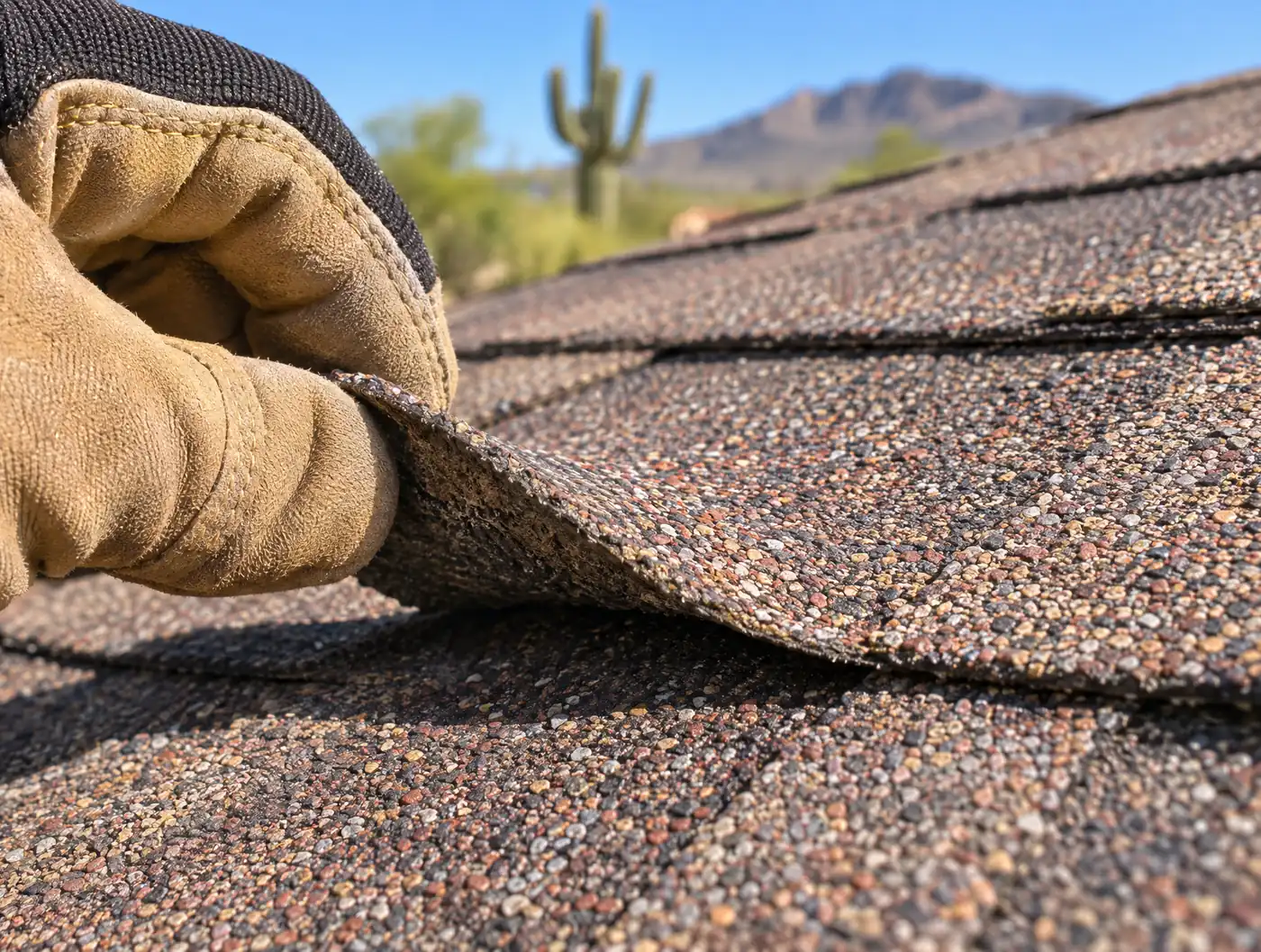
Rejuvenation is for an asphalt shingle roof that’s aging but still doing its job. Your roof may be a fit if:
- The shingles have faded to gray or look chalky.
- You find some grit in the gutters or at the downspouts.
- The roof doesn’t leak and there are no water stains on the ceilings.
- The shingles still lie mostly flat. Any curling is limited to a few, not whole slopes.
- You can’t see the dark mat showing through anywhere.
- The decking feels solid underfoot.
Even if that sounds like your roof, the evaluation decides. A photo from the street can’t tell you how the shingles bend or how the decking holds up. Our is my roof a candidate page walks through the signs in more detail.
Who it’s not for
Some roofs need a roofer, not a treatment. If we find any of these, we’ll tell you plainly and give you the photos:
- Active leaks, or fresh water stains inside.
- Soft or spongy decking.
- Missing, torn or curled shingles across whole slopes.
- Bare spots where the mat shows through.
- Storm or impact damage that hasn’t been repaired.
- Flashing that has pulled loose around vents, walls or chimneys.
- Tile, foam or metal roofs. We treat asphalt shingles only. See tile and foam roofs.
SoyLei describes its product as preservation, not emergency repair. We don’t do repairs or replacement ourselves. Take our photos to any roofer you like.
You probably don’t need this if…
- Your shingles still bend and hold their granules. There may be nothing to do yet, and we’ll tell you so.
- You already plan to replace the roof soon.
- Your shingle maker or your HOA says no to field-applied treatments.
- Your roof leaks. A treatment won’t stop water that’s already getting in. That’s a repair.
- Your roof is tile, foam or metal.
- You’re hoping for a smaller power bill. We don’t sell it for that and make no claim about it.
6 questions to ask anyone who offers to treat your roof
Ask us these too. Anyone who sprays roofs should answer them without squirming.
- Will a person get on my roof, and do I get the photos? A drive-by or a drone shot can’t tell you how a shingle bends. You should see what they saw.
- What’s the product, who makes it, and where can I read about it? You should be able to read the maker’s own pages and its safety data sheet.
- What do my shingle maker and my shingle warranty say? Some shingle makers, Owens Corning among them, have published bulletins advising against field-applied rejuvenators. Owens Corning’s August 2026 bulletin lists risks such as blistering and curling. A treatment can also affect your shingle warranty, so read the warranty terms first.
- Does my HOA need to approve it? Many Valley homes are in an HOA, and a treated roof may look darker. Ask before anything is booked. Here’s how HOA approval works.
- What has been tested in heat like ours? For the product we use, the honest answer is lab work at 140°F and no published desert field data yet.
- If you find damage, what will you try to sell me? Our answer is nothing. We don’t do repairs or new roofs.
How it works, from first look to spray day
1. The evaluation
Someone gets on the roof, checks the shingles by hand and photographs what we find. There’s no charge for it.
2. A straight answer
Treat it, wait, or call a roofer. If treatment fits, we explain what’s involved and what it won’t do. If you’d like a rough number first, the instant roof estimate is a quick place to start.
3. Spray day
SoyLei’s directions call for mixing the concentrate at five parts water to one part product and spraying it in overlapping passes, at about one gallon of the mix per 200 square feet. SoyLei also says to check the forecast so no rain, strong wind or severe weather is expected during or after application. We book the day around that.
The product’s safety data sheet carries the signal word “Danger” for serious eye damage and skin sensitization. Our crew follows it. They wear eye and skin protection, cover plants, cars and windows against overspray, and ask that people and pets stay clear. Freshly treated shingles can be slippery, so nobody walks the roof until it has dried.
4. After
You get photos of the finished roof. SoyLei says treated shingles “may appear darker or refreshed after application, especially when the existing roof is sun-bleached.” The full step-by-step is on our process page.
Who’s behind Shingle Restore Pro
Shingle Restore Pro is run by Mark Voorhies. Mark already runs a court resurfacing business in the Phoenix area, working on pickleball, tennis and basketball courts. Our crews, trucks and spray equipment come from that trade.
What’s new for us is the roof, so we keep the job narrow on purpose: asphalt shingles, one product, and a careful look before anything gets sprayed. If you’re still weighing it up, read rejuvenate or replace your shingle roof first.
Your next step
Book a free roof evaluation. We’ll get on the roof, take the photos and tell you which of the three answers fits. If the answer is “not us,” you still keep the photos.
Common questions
Will roof rejuvenation stop a leak?
No. A leak means water is already getting through, and that takes a repair. Rejuvenation is for shingles that are drying out on a roof that still keeps water out. If we find a leak, soft decking or missing shingles, we’ll show you the photos and tell you it’s a job for a roofer. We don’t do repairs, so you get a straight answer with nothing to sell behind it.
How long does roof rejuvenation last?
We don’t put a number on it. No field study we’ve found shows how many years a treatment adds to any one roof, so we make no such claim. SoyLei publishes its own reapplication guidance, and it gives no separate advice for desert climates. We look at the roof again before any re-treatment. There’s more on <a href="/faq/how-long-does-roof-rejuvenation-last/">how long roof rejuvenation lasts</a>.
Can you treat a tile or foam roof?
No. We work on asphalt shingles only, and SoyLei says its product "is for asphalt-shingle roof maintenance." Tile and foam are different roof systems with different problems. If you have one, a roofer who works on that roof type is the right call. Our <a href="/tile-and-foam-roofs/">tile and foam roofs</a> page explains why we leave them alone.
Will rejuvenation change how my roof looks?
It may. SoyLei says treated shingles can look darker or refreshed, especially on a sun-bleached roof. It isn’t paint and it doesn’t leave a film or a colored layer on top. If you’re in an HOA, mention the possible change in look to the architectural committee before work is booked, so nobody is caught off guard.
Can’t I just buy the product and spray it myself?
SoyLei sells it directly, so you could. Before you do, read the safety data sheet. It lists serious eye damage and skin sensitization, and SoyLei warns that freshly treated shingles can be slippery. It also means working on a pitched roof in Arizona sun. With us, you get the evaluation first, a crew in protective gear, and someone who will tell you plainly if your roof shouldn’t be treated at all.