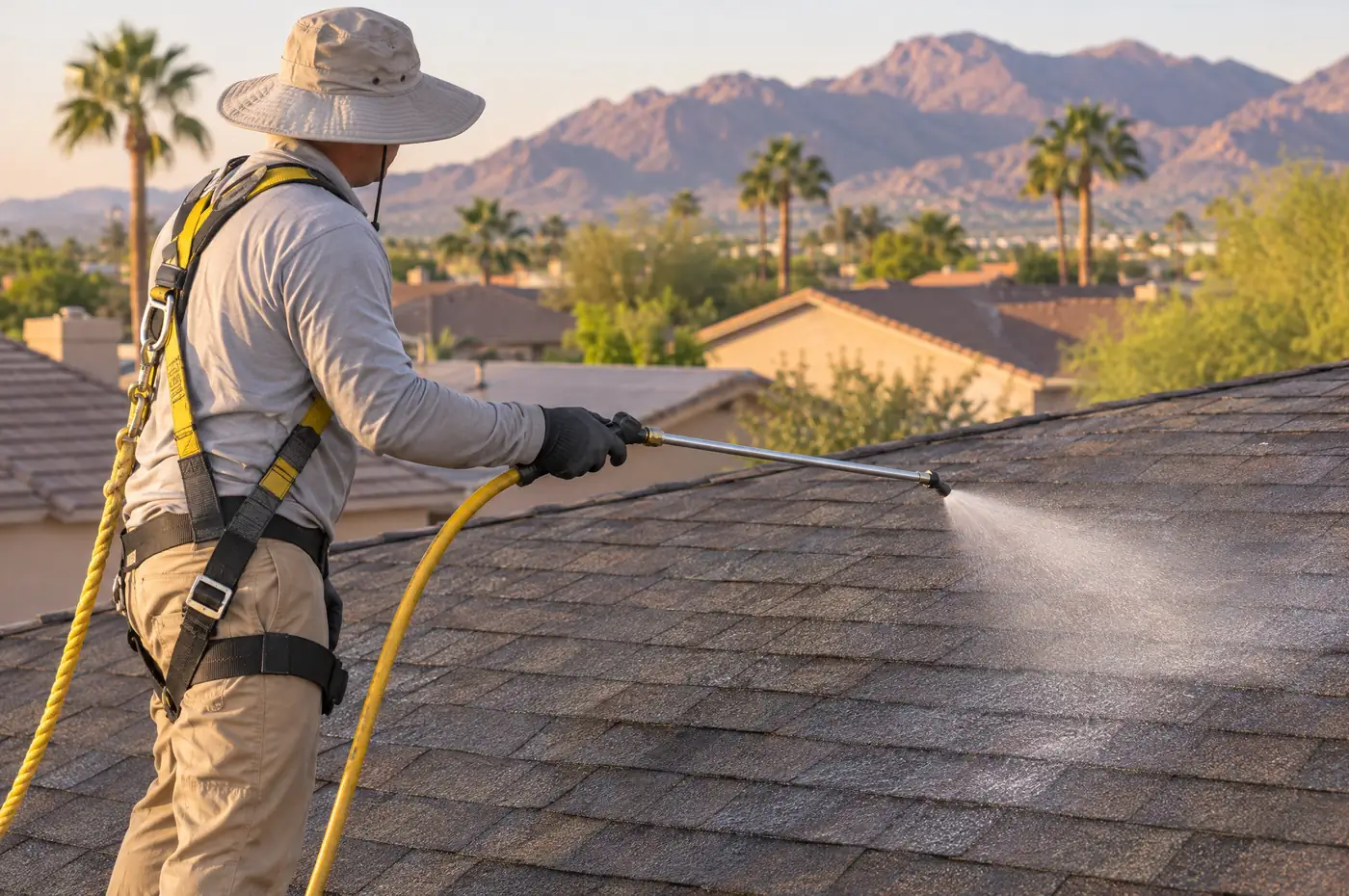
We use one product, on one kind of roof. The product is APEX-1132, a soybean oil treatment made by SoyLei Innovations in Ames, Iowa. The roof is asphalt shingle. If yours is tile, foam or metal, this treatment isn’t for it.
Below is what SoyLei says about its product, in its own words and linked, and where the maker’s claims end and our own judgment starts. Anything quoted from SoyLei is the manufacturer’s claim, not a result we measured.
Who makes it
SoyLei Innovations is based in Ames, Iowa. On its product page, SoyLei says the product “was created by researchers from Iowa State University” and that “The inventors founded SoyLei and personally develop, formulate, manufacture, and support the product.”
We like being able to point to the people who make what goes on your roof. Why we picked a soy-based product in the first place is its own story, told in why we use a soy-based treatment.
What SoyLei says it is
SoyLei describes the product as “a 5:1 soybean-oil concentrate engineered to penetrate asphalt shingles, restore shingle flexibility, improve granule adhesion.” It also says the product “is powered by SESO, short for semi-epoxidized soybean oil.”
In plain words, the soybean oil has been chemically changed on purpose. In a separate article, SoyLei explains that epoxidation “reduces the number of conventional oxidation sites.” The idea, as SoyLei tells it, is that oxygen has fewer places to attack the oil once it is in the shingle. That is the maker’s reasoning about its chemistry. We pass it on so you know what you’d be buying, and we don’t present it as a field result.
Why shingles dry out
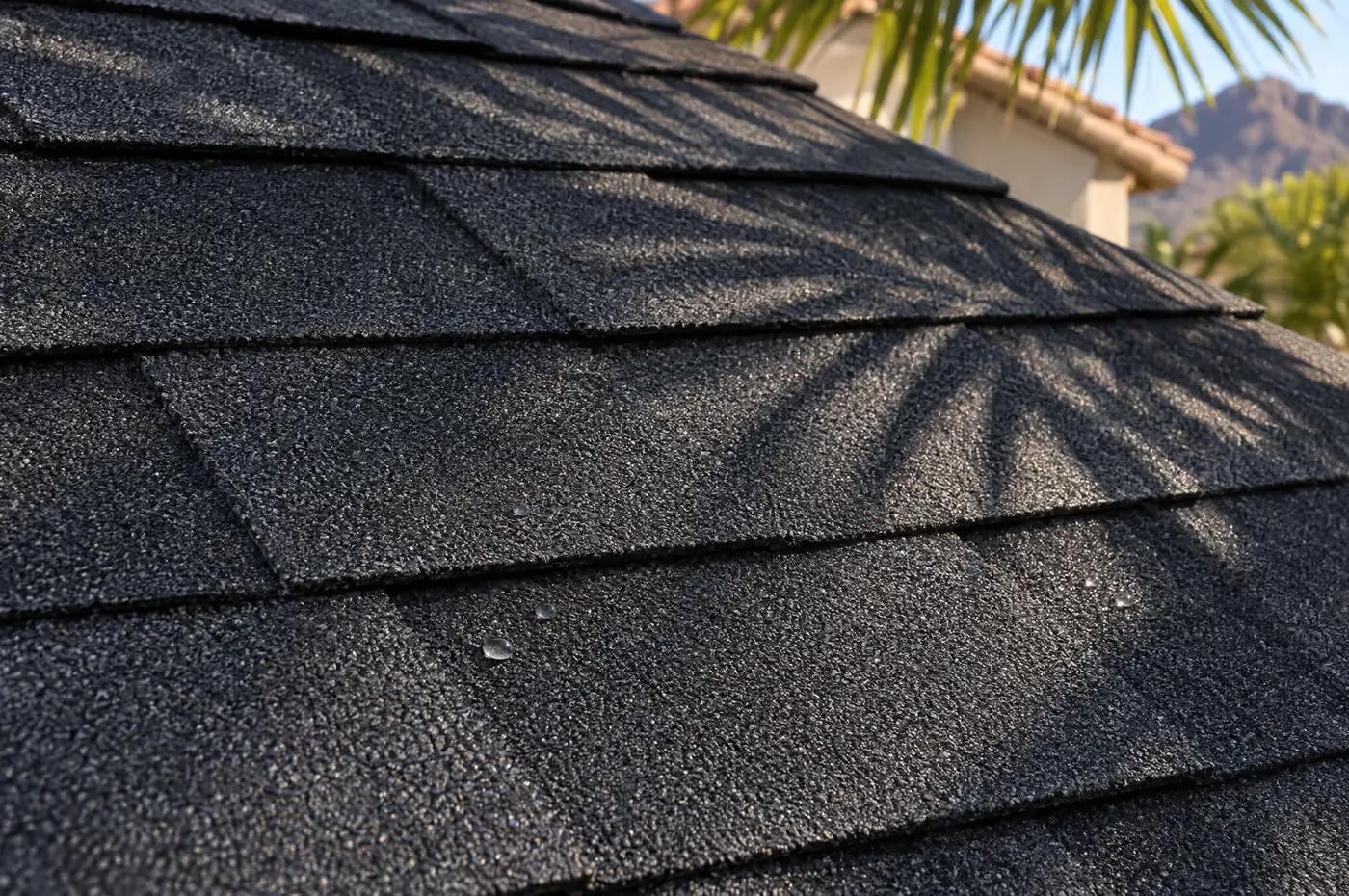
Asphalt shingles age from the top down. SoyLei’s own explainer puts it this way: “Heat speeds aging, sunlight contributes UV exposure, and oxygen reacts with asphalt through oxidation.” Independent researchers at Lawrence Berkeley National Laboratory describe the same thing: as asphalt oxidizes it grows harder and more brittle, and heat drives off the lighter oils that keep it flexible.
As the shingle stiffens, its grip on the granules weakens, and the grit starts showing up in your gutters. Phoenix turns all of that up. Our page on what Arizona heat does to asphalt shingles has the numbers and the sources.
How it goes on
The product ships as a concentrate and gets mixed with water before it is sprayed. SoyLei’s product page says one gallon of concentrate makes six gallons ready to spray, enough for about 1,200 square feet, or 12 roofing squares.
SoyLei’s application brochure calls for spraying at “1 gallon per 200 sq ft, using smooth, overlapping passes for even coverage.” It also says the product “applies white and is designed to minimize dripping.”
More is not better. The peer-reviewed paper on SoyLei’s emulsion warns that “overly high SESO loadings may compromise dimensional stability.” So we spray at the rate the maker gives, not heavier. Our step-by-step process covers the day itself, from prep to walk-through.
What it is not
SoyLei is clear on this, and so are we. In SoyLei’s words, “It is not paint, not a roof coating, and not a film-forming sealcoat.” It soaks in rather than sitting on top as a layer.
- It is not a sealer you can see or feel on the surface.
- It is not a repair. It won’t stop a leak, put back a missing shingle or fix flashing.
- It is not a way to save a roof that is already failing. A roof with soft decking or broken shingles needs a roofer.
- It is not for tile, foam or metal roofs.
How it may look afterward
SoyLei says “Treated shingles may appear darker or refreshed after application, especially when the existing roof is sun-bleached.” A change in shade is something your HOA may care about, so we raise it before the job, not after.
Product information for your HOA
If your HOA wants to review the product, we pull the current product description and safety data sheet from SoyLei and help you send them with your request. The safety data sheet is worth reading. It warns that the product can cause serious eye damage and allergic skin reactions, which is why our crew wears eye and skin protection and keeps people and pets clear while spraying.
What shingle makers say
Here is the part that is easy to leave out. Some shingle manufacturers, Owens Corning among them, have published bulletins advising against field-applied rejuvenators. Owens Corning’s August 2026 technical bulletin also notes that “added foot traffic during application could lead to premature aging of the shingle.”
A treatment can also affect your shingle warranty. So check your warranty first, and if you can, get the shingle maker’s position in writing. Our answer to will roof rejuvenation void my shingle warranty walks through how to do that. If keeping that coverage matters more to you than treating the roof, we’ll tell you to wait.
See if it fits your roof
The product is only half the question. The other half is your roof. Read how roof rejuvenation works for Phoenix shingle roofs, then book a free roof evaluation. We’ll tell you plainly if your roof is a fit, and if it isn’t.
Common questions
Is this treatment a roof coating?
No. SoyLei says its product is not paint, not a roof coating and not a film-forming sealcoat. It is sprayed on and soaks into the shingle rather than building up a layer on top. That also means it does not seal leaks or cover damage, so a roof with those problems needs a roofer before anything else.
Who makes the product you use?
SoyLei Innovations, a company in Ames, Iowa. SoyLei says the product was created by researchers from Iowa State University who went on to found the company, and who still develop and make it. We buy the product and apply it. We don’t make it, and we quote SoyLei’s own pages when we describe what it does.
Will the treatment change the color of my roof?
It can. SoyLei says treated shingles may look darker or refreshed after application, most of all on a roof that has been bleached by the sun. If you are in an HOA, that change in shade may matter to the architectural committee, so check with them before the job. We’ll point it out at the evaluation.
Can I see the product information before I decide?
Yes. SoyLei publishes a product page and a safety data sheet, and we link both on this page. We are happy to walk you through them at the evaluation, and to help you send them to your HOA if it wants to review the product. Read the safety data sheet in full, since it lists the precautions for eyes and skin.