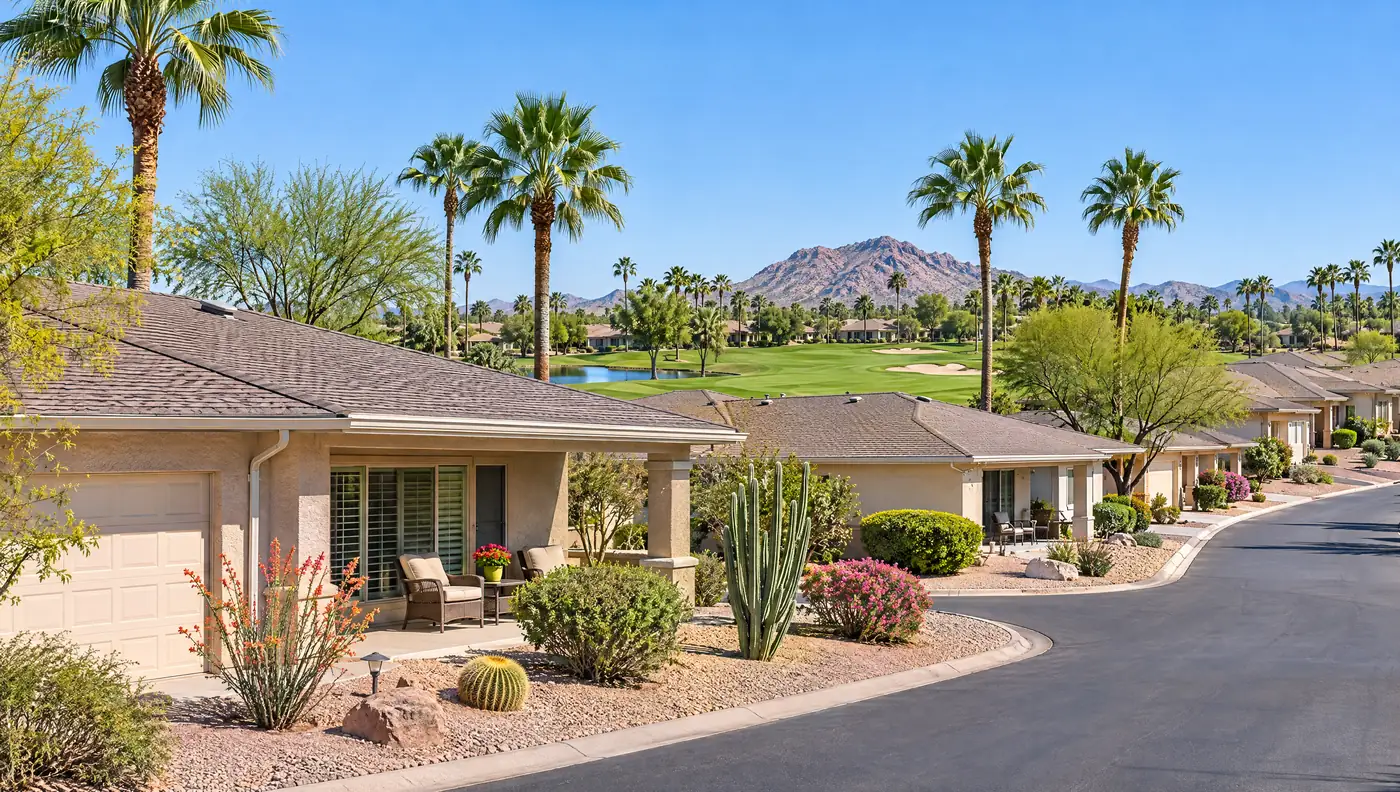
“Built by the Del Webb Corporation between 1978 and 1997, Sun City West is a 16,900-home community 2.5 miles west of the original Sun City, Arizona.”
Recreation Centers of Sun City West, history page
That one sentence explains a lot about the roofs here. Nearly every house went up within the same stretch of about 20 years. The American Community Survey (2020 to 2024) backs it up. The median home was built in 1989, 84% were built before 2000, and 64% went up between 1980 and 1999. That’s the highest 1980 to 1999 share of any Valley community on our list.
Older houses, not always older roofs
The newest homes from the original building era are now close to 30 years old. That doesn’t make every roof 30 years old. Roofs get replaced, so some houses here are on a second roof while others still have the first.
Age still matters, because heat works on asphalt slowly. A peer-reviewed overview from Lawrence Berkeley National Laboratory describes a model in which “heat first promotes the diffusion of (lower molecular weight) oils out of the bulk of the asphalt.” Some of those oils evaporate and others wash away. That slow loss is the drying-out rejuvenation is aimed at. But an older roof isn’t automatically a candidate. Shingles that are cracked, torn or missing pieces need a roofer, not a treatment.
There’s also the question of material. Many Valley homes have concrete or clay tile, and rejuvenation does nothing for tile. We work on asphalt shingle roofs only. So before age even comes up, we check what your roof is made of. Tile owners can read tile and foam roofs.
A community of owners
About 88% of occupied homes in Sun City West are owner-occupied, and 81% are detached houses. The median resident age is 74.8, about twice Maricopa County’s 37.6. Sun City West is an unincorporated community, so these figures come from the Census survey for the area rather than a city government. They’re on Census Reporter.
Please don’t climb up there
We’d say this to anyone, at any age. A roof in a Valley summer is hot, and a fall from one is serious. Phoenix Sky Harbor averages 111 days a year at 100°F or more, per the National Weather Service, and the EPA puts midday summer temperatures on standard black asphalt roofs at 165 to 185°F nationally.
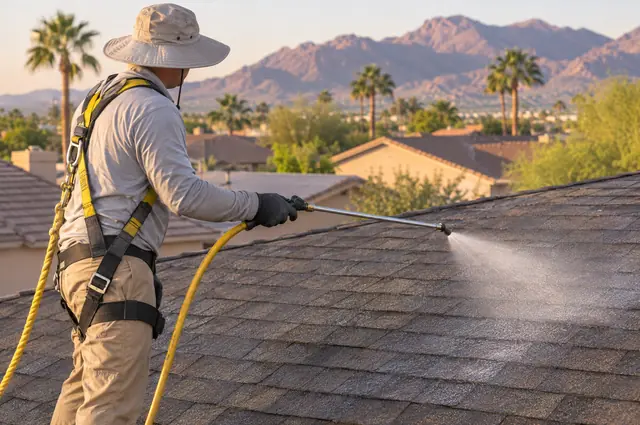
Treatment adds another reason to stay down. The product’s data sheet from SoyLei Innovations of Ames, Iowa notes that “Wet product may create a slip hazard.” Our crew does the roof work. You can watch from the shade.
What SoyLei has and hasn’t tested
SoyLei describes its product as a soybean-oil concentrate that is diluted and sprayed onto asphalt shingles. In a 2025 paper SoyLei publishes, test shingles were “placed in a 60 °C oven for 48 hours” to simulate summer rooftop heat. 60°C is 140°F. The paper itself calls for field validation, and SoyLei has published no desert field data. You should know that before you decide. There’s more on our soy-based roof treatment.
Thinking about selling?
Buyers ask about roofs. If a move may be coming, knowing what’s on yours and what shape it’s in gives you a straight answer when the question comes up. Our page for realtors and home sellers and the post on selling a Phoenix home with an older shingle roof cover the details.
Book without the ladder
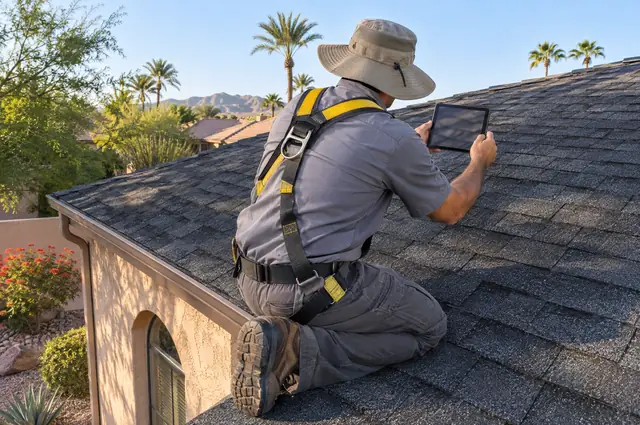
Sun City West is one of our service areas. Book a free roof evaluation and we’ll tell you what your roof is made of, how the shingles look, and whether roof rejuvenation makes sense, all without you setting foot on a ladder.