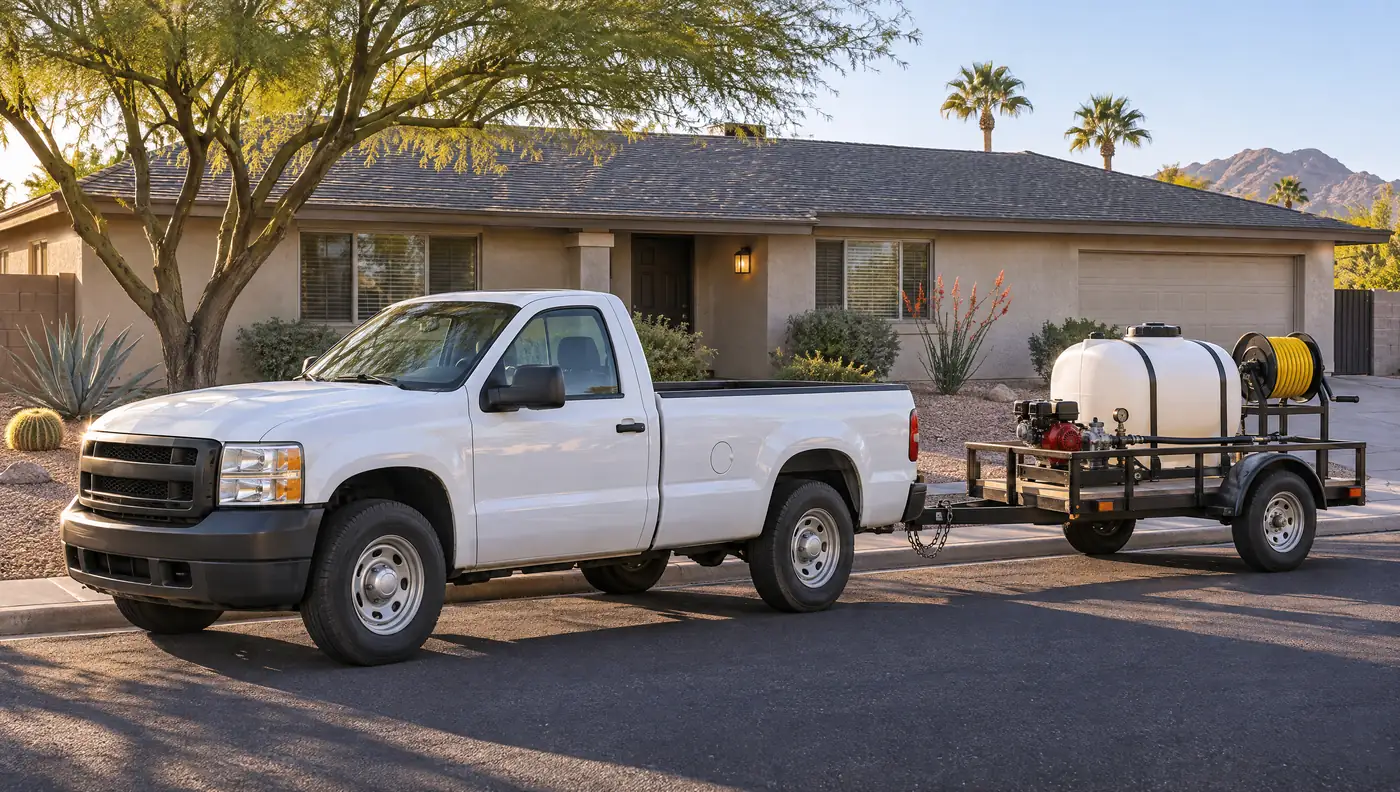
Most of a roof treatment happens before anyone sprays anything. The first look, the questions, the paperwork and the prep matter as much as the spray itself.
Here is how a job typically runs with us, in seven steps. Your roof, your HOA and the weather can change the details. When they do, you’ll hear it from us up front.
Step 1: the free roof evaluation
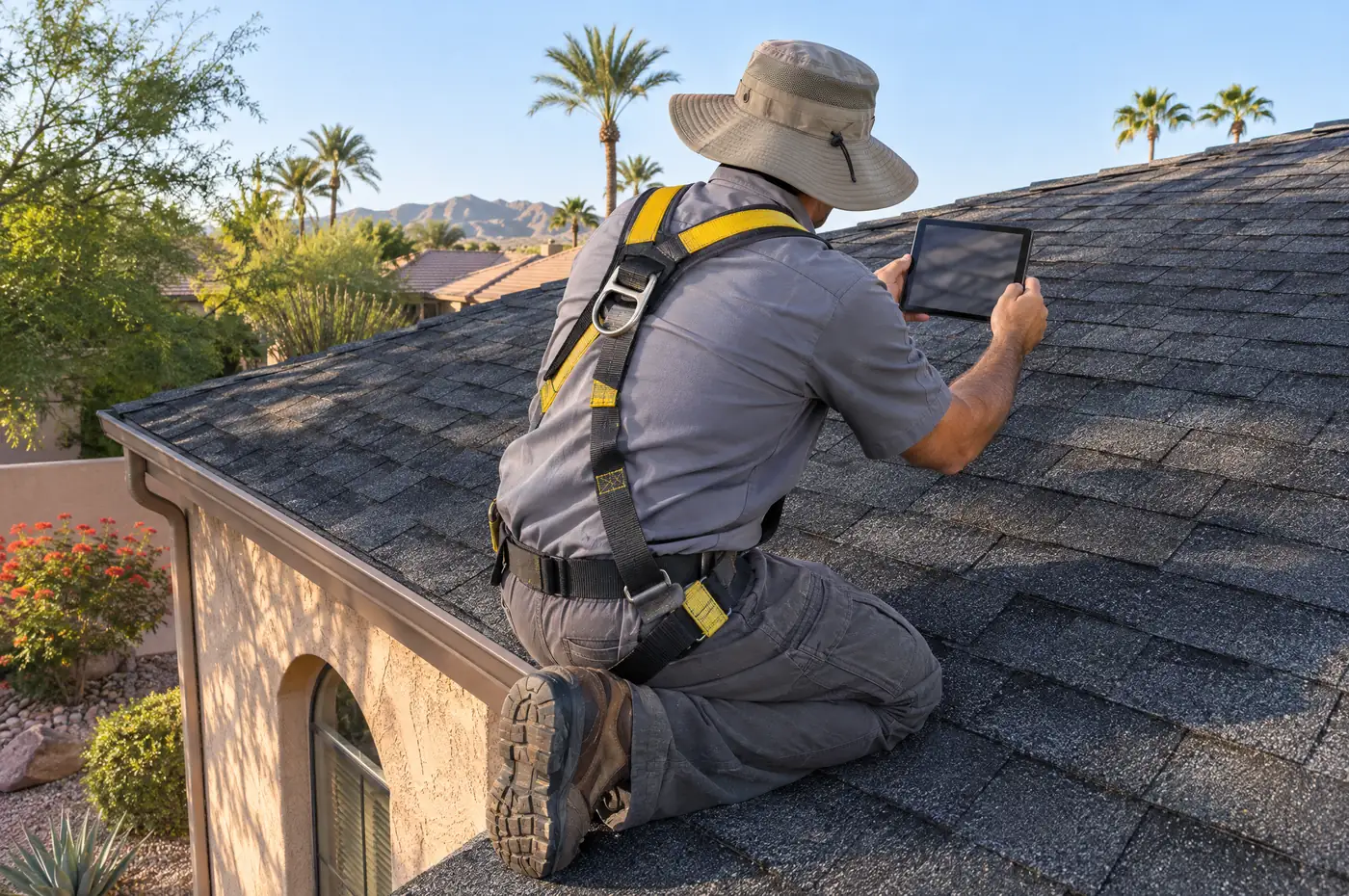
We start by looking. First, the roof type: we treat asphalt shingles only. Then the condition of every slope. We check for lifted, cracked or missing shingles, bare spots where the granules are gone, signs of leaks, soft spots and tired flashing. We take photos as we go, so you see what we see.
The maker of the product we use treats this step as required too. SoyLei’s application brochure lists a roof check before any spraying and says the roof “must be dry, intact, and properly installed at the time of application.” You can book a free roof evaluation online.
Step 2: a straight answer and the paperwork
After the look, you get one of three answers. Yes, the roof is a good fit. Maybe, once a roofer fixes a few things first. Or no, the roof is past treating. We don’t do repairs, so a no from us is not a sales tactic.
If the answer is yes, two bits of homework come next. Check your shingle warranty, since a treatment can affect it. And if you are in an HOA, find out whether the architectural committee wants to review roof work. We’ll help with the request, including the product details from our treatment page and a note that treated shingles can look a little darker.
Step 3: picking the day
Arizona heat shapes the schedule. In the hotter months, crews typically start early in the morning and work while the sun is low. We don’t claim the product needs a particular temperature, because SoyLei hasn’t published one.
Weather can move the date. SoyLei’s brochure says to check the forecast and confirm “there is no rain, strong wind, or severe weather expected during or after application.” In monsoon season that rules out some afternoons, and we’d rather move your date than spray ahead of a storm.
How long the job takes depends on the size and pitch of the roof, so we give you a time window at the evaluation. More on that in how long the treatment takes to apply.
Step 4: prep
The roof gets cleaned off first. SoyLei’s brochure calls for removing “leaves, branches, and other debris so the surface is clean and ready for treatment.” In practice that means blowing off the slopes and clearing the valleys, where dust and debris pile up.
Then we protect what is around the house. Plants near the drip line get covered. So do the pool, patio furniture and anything else close to the roof edge. We ask you to move cars out of the driveway.
We follow SoyLei’s safety data sheet, which warns about eye and skin contact. The brochure also lists goggles, high-grip shoes and fall protection as required gear for roof spraying. That is what our crew wears. We’ll ask you to keep kids and pets indoors while we spray.
Step 5: the application
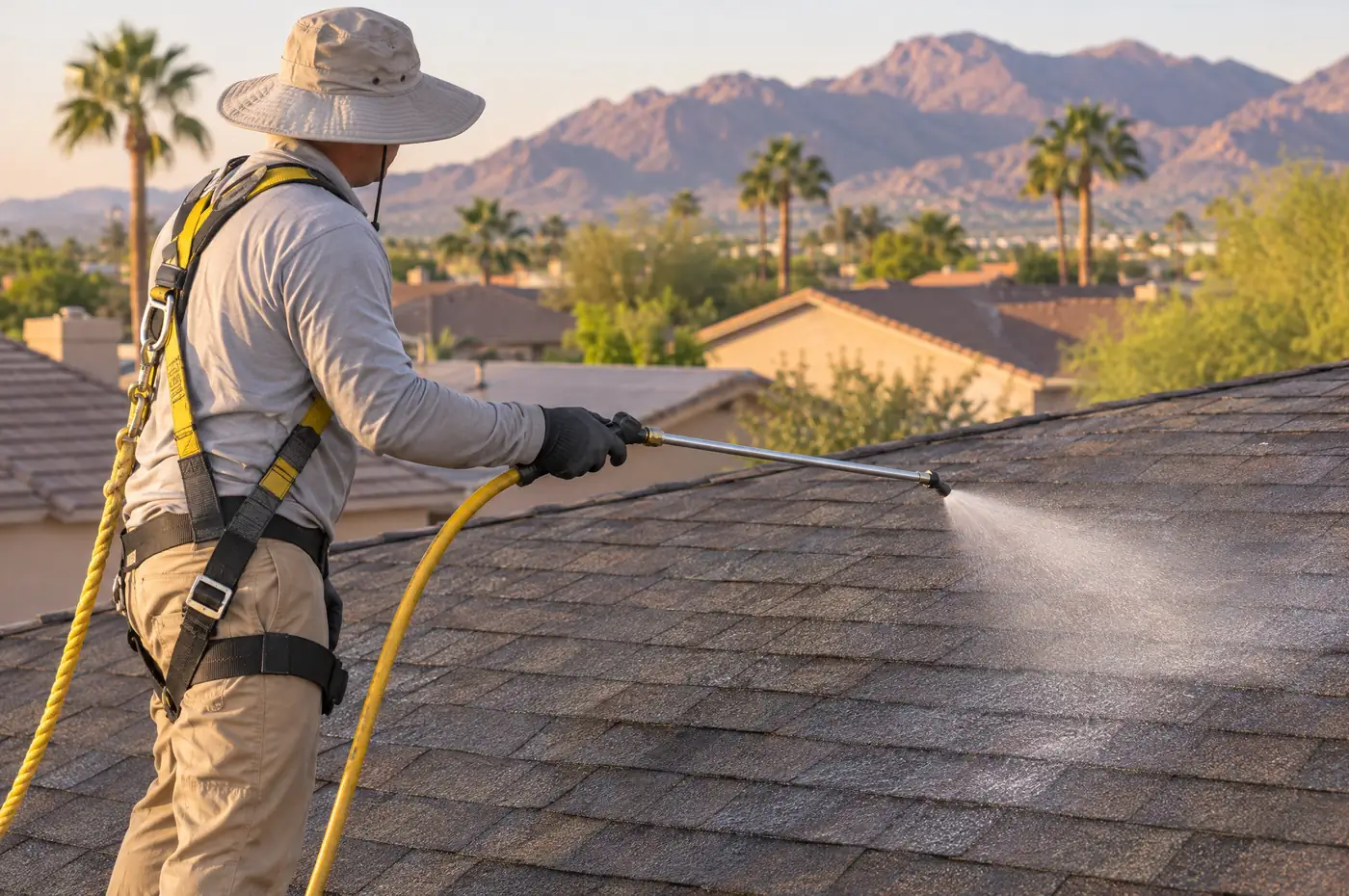
The treatment is mixed with water from the concentrate and sprayed with a low-pressure sprayer, one slope at a time. The crew works in even, overlapping passes at the coverage rate SoyLei gives, and keeps overspray down by adjusting the nozzle pattern.
Our crew comes from the court resurfacing trade, where spraying big surfaces evenly in the Arizona sun is the everyday job. You can read more about that on our about page.
What you’ll notice on the day
- The sound of a blower during prep, then the quieter hiss of the sprayer.
- The shingles turn white as they are sprayed. SoyLei says the product “applies white.”
- Covers on your plants and pool until the crew packs up.
- Nobody but the crew on the roof. SoyLei warns that freshly treated shingles can be slippery, so stay off it and keep ladders put away until we tell you otherwise.
Step 6: the walk-through and after photos
Before we leave, we walk the property with you. You get after photos of each slope to set next to the before photos from the evaluation. We take the covers off, check the windows, cars and plants for overspray, and point out anything we noticed that a roofer should look at, like a loose piece of flashing.
Step 7: the return check
A treatment is not a one-day relationship. We come back later to look at the roof again, at a time we agree on with you. We check the same slopes, compare photos and tell you honestly how the roof is holding up in the heat.
If you want that on a regular schedule, our roof care plan sets it up. SoyLei publishes its own guidance on when to reapply, and we’ll go over it with you rather than push a date.
Start with step one
Every job starts the same way. Book your free roof evaluation and we’ll tell you which of the three answers fits your roof. If you’d like a rough idea first, try the instant roof estimate.
Common questions
Do I need to be home during the treatment?
Not always. We need to get into the yard, know where the pets are, and have the cars moved out of the way. We’d like you there for the walk-through at the end, though, so you can see the after photos and ask questions while the crew is still on site. We’ll sort out the details when we book the day.
What do you do about my plants, pool and car?
We cover plants near the roof edge, the pool and anything else close to the house before we spray, and we ask you to move cars off the driveway. The crew keeps overspray down with the nozzle setting and works slope by slope. Before we leave, we check windows, cars and plants and clean up anything that caught spray.
What if the weather turns on the day?
We reschedule. SoyLei tells applicators to make sure no rain, strong wind or severe weather is expected during or after the application. In monsoon season that can mean moving a date at short notice. We would rather lose a day than spray a roof ahead of a storm, and we’ll call you as soon as the forecast changes.
What happens if you find damage during prep?
We stop and show you. If clearing the roof turns up a cracked or lifted shingle, a soft spot or flashing that has pulled away, that part of the roof needs a roofer before any treatment goes on. We don’t do repairs ourselves. Once the repair is done, we can take another look and pick a new date.